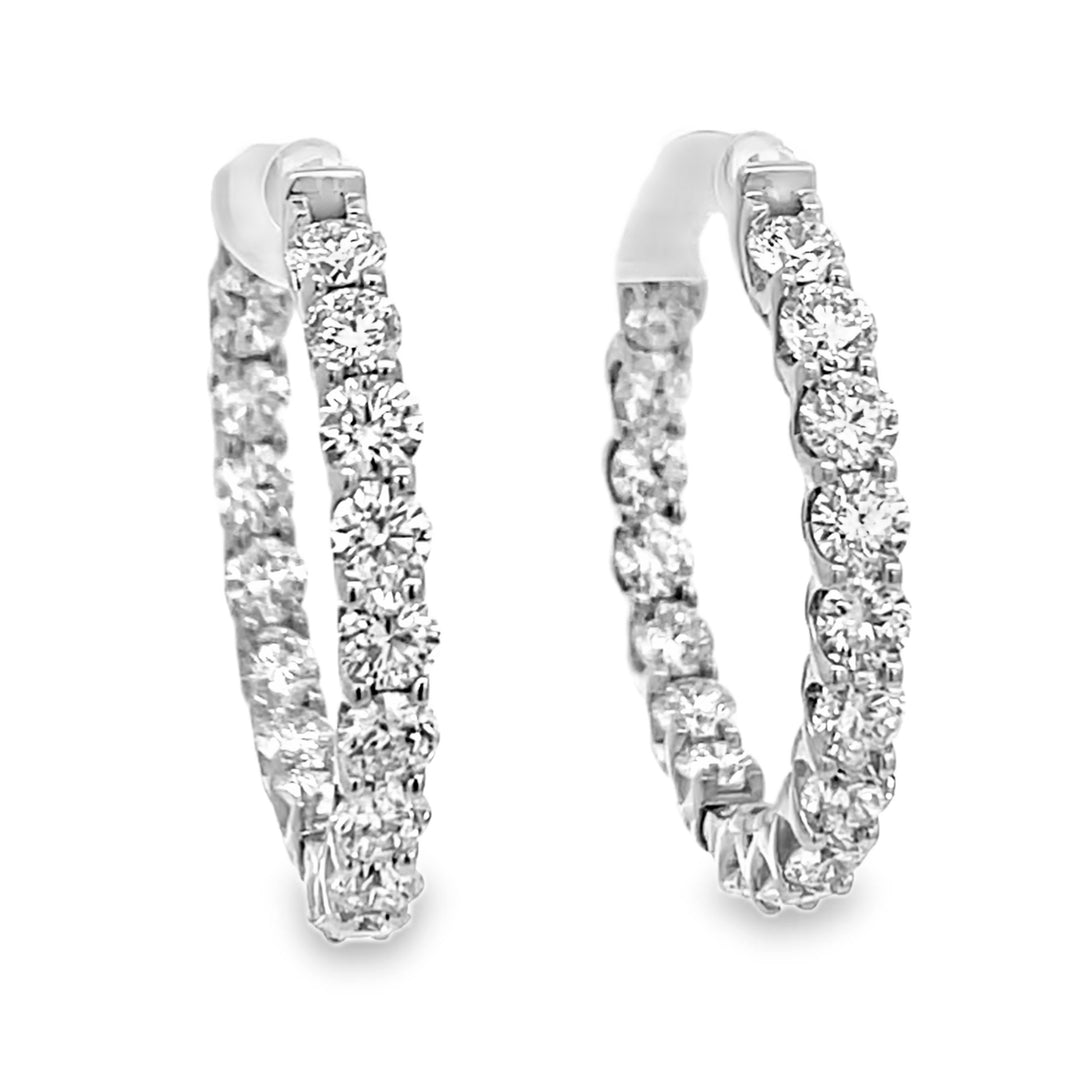
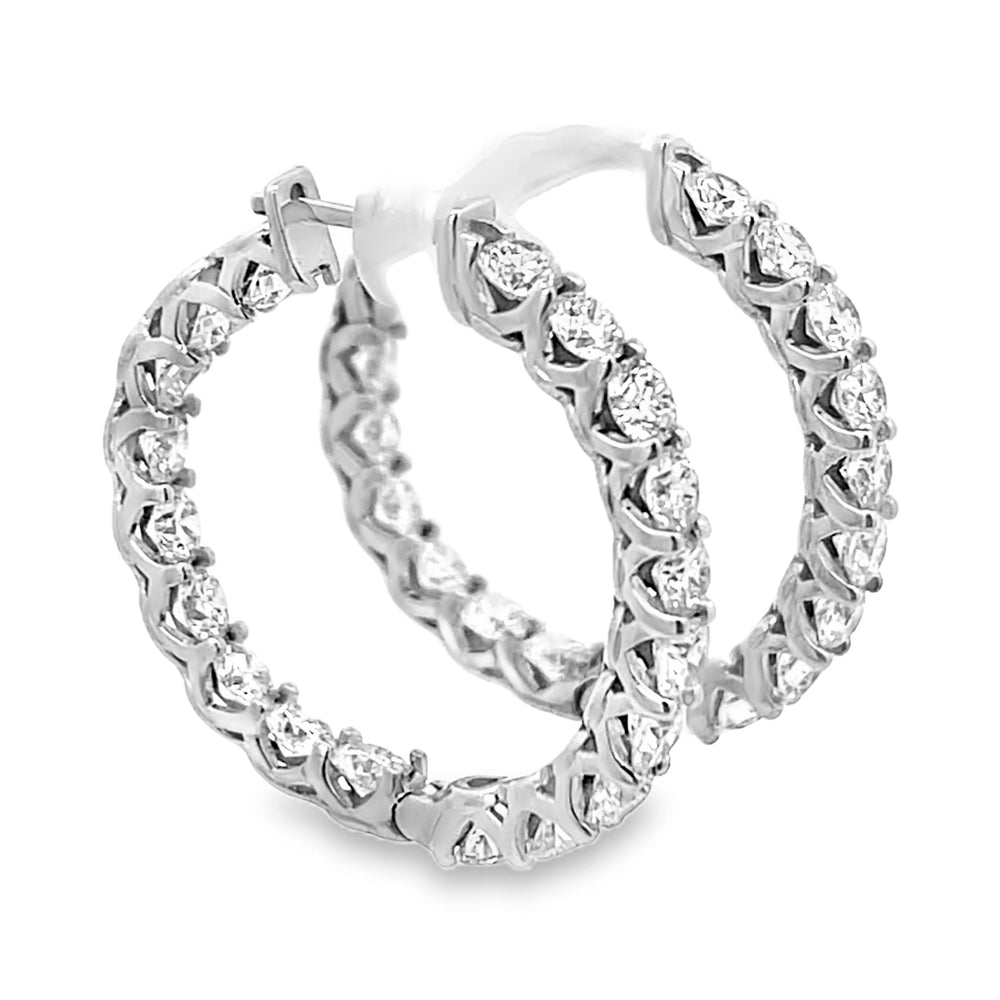
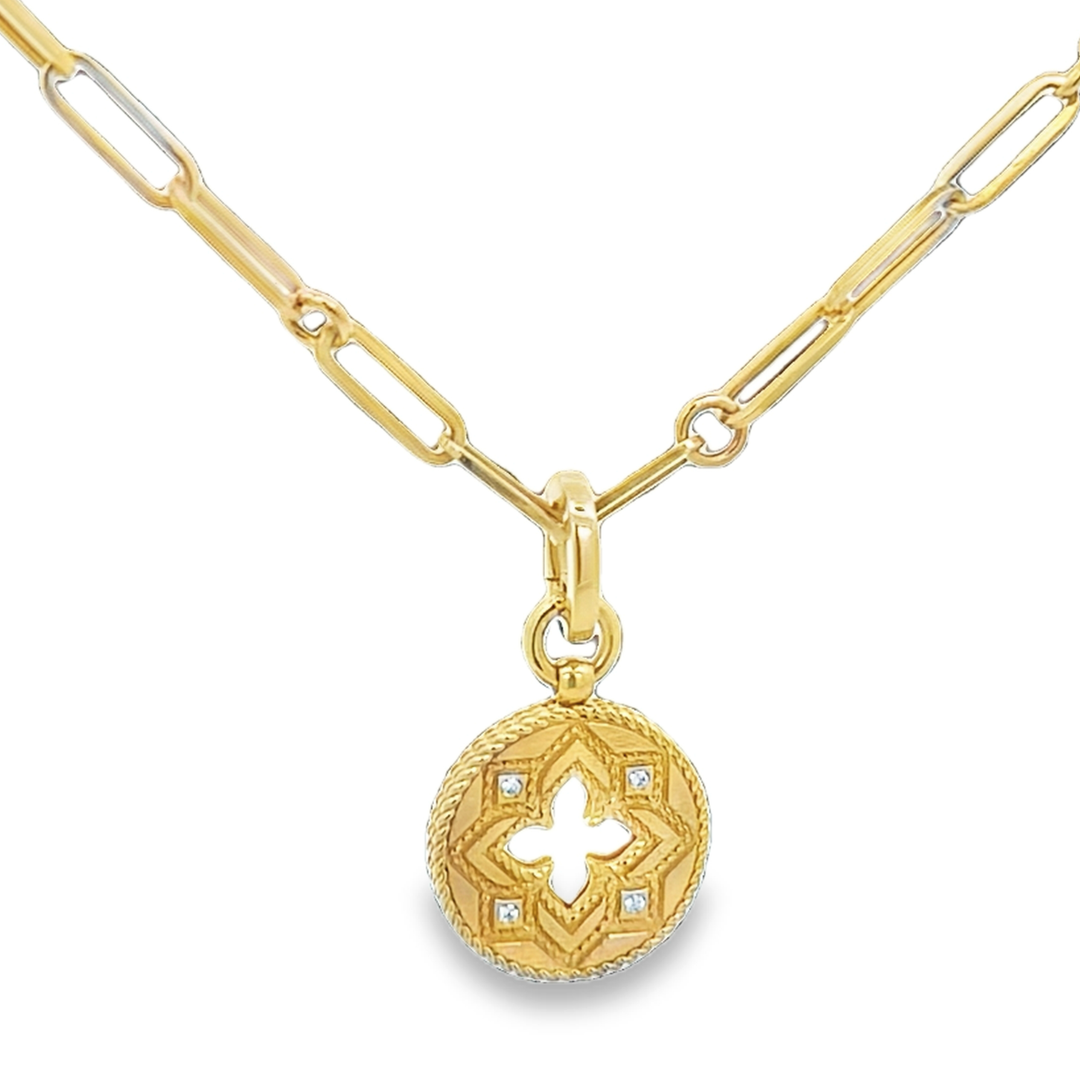
Lab-Grown Diamonds for Valentine's Day
Compare lab-grown and natural diamonds at our Modesto showroom. Same sparkle, same durability—often at a fraction of the cost. Perfect for engagement rings, earrings, and Valentine's Day gifts.

Are Lab-Grown Diamonds a Smart Valentine's Day Gift?
Valentine's Day is evolving, and so are the diamonds we give. Lab-grown diamonds have surged in popularity as Valentine's Day gifts, and for good reason. You're no longer limited to mined diamonds when you're looking for that symbol of affection.
The question many people ask as Valentine's Day approaches: Are lab-grown diamonds a smart choice? This guide walks through the decision. You'll see how lab-grown diamonds compare to natural ones, understand the value they offer for Valentine's Day gifting, and learn how to shop confidently. Whether you're considering an engagement ring from Gabriel Fine Jewelers, diamond earrings, or a custom necklace, you deserve to make an informed choice that fits your love and your values.
The diamond landscape has shifted. Lab-grown diamonds are at the center of that shift. Here's whether they deserve a place in your Valentine's Day plans.
Understanding Lab-Grown Diamonds
Lab-grown diamonds are created in controlled environments that replicate the conditions that form natural diamonds deep in the earth. Two main methods are used: High Pressure High Temperature (HPHT) and Chemical Vapor Deposition (CVD).
How Are Lab-Grown Diamonds Made?
- HPHT Process: HPHT mimics the conditions deep in the Earth's mantle. Carbon is subjected to extreme pressure and heat until it crystallizes into diamond.
- CVD Process: CVD uses a carbon-rich gas in a vacuum chamber. Carbon atoms settle onto a diamond seed and build layer by layer until a complete diamond forms.
Creation typically takes several weeks, depending on size and quality. Scientists can produce diamonds in days that would take millions of years to form naturally. That doesn't mean lower quality—it means human innovation replicating nature's process with precision.
The Science Behind Identical Diamonds
Lab-grown diamonds have the same physical, chemical, and optical properties as mined diamonds. Both are pure carbon in the characteristic diamond crystal structure. That structure gives diamonds their hardness (10 on the Mohs scale), whether they came from a mine in Botswana or a lab in California.
Under professional equipment, you'll find:
- Identical refractive index—light behaves the same way, creating that signature diamond sparkle
- Same thermal conductivity—both fog briefly when you breathe on them, then clear instantly
- Equal hardness—lab-grown diamonds scratch glass and resist wear just like natural diamonds
- Matching chemical composition—pure crystallized carbon with trace elements that can affect color
The Federal Trade Commission recognizes lab-grown diamonds as real diamonds and has dropped the word "synthetic" from its guidelines. A diamond is a diamond, regardless of where it was made.
Professional Evaluation: Your Quality Assurance
Diamond quality requires expert assessment, whether the stone is lab-grown or natural. Professional evaluation ensures you get what you're paying for, with certified documentation. The Gemological Institute of America (GIA), International Gemological Institute (IGI), and other labs grade lab-grown diamonds using the same standards applied to mined diamonds.
A professional evaluation covers the Four C's—cut, color, clarity, and carat weight—with precision instruments. You need this because:
- Cut quality determines how well your diamond sparkles. A poorly cut lab-grown diamond will lack fire and brilliance, just like a poorly cut natural diamond.
- Color grading requires controlled lighting. Lab-grown diamonds can achieve exceptional colorlessness (D-F grades) or fancy colors like pink, blue, or yellow with greater consistency than natural diamonds.
- Clarity assessment identifies inclusions under 10x magnification. Lab-grown diamonds may have different inclusion types (metallic flux in HPHT, dark carbon in CVD), but these don't diminish value when properly disclosed.
- Carat weight is verified on calibrated scales. Diamond value increases with size, so accurate weight matters.
Certification from recognized laboratories gives you a detailed blueprint of your diamond's characteristics. That documentation matters for insurance and future appraisals.
Ethical Advantages of Lab-Grown Diamonds
When you choose a lab-grown diamond for Valentine's Day, you're choosing a gift that aligns with values around the environment and social responsibility. That matters to a lot of people.
Environmental Benefits
Traditional diamond mining moves a lot of earth—some estimates say extracting a single carat can displace up to 250 tons. That leads to habitat destruction, soil erosion, and landscape changes that can take decades to recover.
Lab-grown diamonds are made in controlled labs, so they don't require:
- Large-scale excavation and land disruption
- Diesel-powered heavy machinery running around the clock
- Water contamination from mining runoff
- Ecosystem destruction affecting local wildlife
Carbon footprint is another factor. Both methods use energy, but lab-grown facilities increasingly use renewable sources. Many producers have committed to carbon-neutral operations, which is hard to achieve with mining that spans thousands of acres.
Water use is different too. Mining consumes huge amounts of water for extraction, processing, and dust suppression. Lab-grown production uses less water, and what is used can be recycled in closed-loop systems.
Conflict-Free Origins You Can Trust
You've probably heard about diamonds funding armed conflicts in certain regions. The Kimberley Process was meant to address this, but gaps remain. Smuggling, document fraud, and human rights violations still occur in some mining areas.
Lab-grown diamonds sidestep this entirely. When you buy a lab-grown diamond from a reputable jeweler like Gabriel Fine Jewelers in Modesto, you know where it came from. No ambiguity, no worry that your romantic gesture supported violence or exploitation.
Transparency extends to labor. Traditional mining, especially in developing nations, has documented problems: child labor, unsafe conditions, low wages, and in extreme cases forced labor. Lab-grown production happens in regulated facilities with documented labor standards. You're supporting jobs in technology and manufacturing where workers have fair wages and safe conditions.
The Modern Valentine's Day Conscience
Many people approach gift-giving differently now. They want Valentine's Day to reflect their values, not work against them. Research shows that a majority of millennials and Gen Z consumers consider ethical sourcing important when buying luxury goods.
This isn't about trading romance for responsibility—it's about adding meaning to your gift. When you give a lab-grown diamond engagement ring or jewelry, you're offering more than beauty. You're showing that your love considers the broader impact of your choices.
Ethical sourcing has become its own kind of love language. You're saying, "I care about you, and I care about the world we share." That message matters to a lot of recipients.
Compare Lab-Grown and Natural Diamonds in Person
Visit our Modesto showroom to see lab-grown and natural diamonds side by side. Our team will answer your questions and help you choose the right stone for your Valentine's Day gift.
Comparing Lab-Grown vs. Natural Diamonds
You Can't Tell Them Apart by Looking
Place a lab-grown diamond next to a natural diamond and you won't see a difference. Both have the same physical properties—the same hardness (10 on the Mohs scale), the same brilliance, and the same fire and scintillation. The crystal structure, refractive index, and dispersion are the same because they're the same material: pure carbon in a cubic crystal structure.
Even experienced jewelers can't tell lab-grown vs natural diamonds apart without specialized equipment. The FTC recognizes lab-grown diamonds as real diamonds and no longer calls them "synthetic." They're genuine diamonds with the same optical and chemical properties as mined stones.
The only way to identify a lab-grown diamond is advanced gemological testing that detects growth patterns or trace elements. Natural diamonds show patterns from millions of years of formation; lab-grown diamonds show patterns consistent with HPHT or CVD creation.
The Price Gap That Changes Everything
Here's where the diamond jewelry comparison gets interesting. Lab-grown diamonds typically cost 40–70% less than natural diamonds of comparable quality. That pricing difference opens up new possibilities for Valentine's Day.
Consider these scenarios:
- A 1-carat natural diamond with excellent cut, VS1 clarity, and G color might run $6,000–$8,000
- The same specs in a lab-grown diamond: $1,500–$2,500
- A 2-carat natural diamond with similar quality: $18,000–$25,000
- The lab-grown equivalent: $4,000–$6,000
So you can save a lot or upgrade a lot. Many couples in Modesto choose a larger, higher-quality lab-grown diamond instead of a smaller natural stone. The visual difference between a 2-carat engagement ring and a 1-carat ring is big—and with lab-grown diamonds, that upgrade is within reach.
Value Retention: The Investment Conversation
Natural diamonds have historically held resale value better than lab-grown diamonds. The secondary market for natural diamonds is established, though even natural diamonds often resell for 25–50% of their original retail price. Lab-grown diamonds currently have limited resale value because the market is still developing and production costs keep falling.
You have to decide what "value" means for your Valentine's Day gift. If you're thinking of diamonds as a financial investment, natural diamonds hold more monetary value over time. If you're thinking about emotional value, personal meaning, and getting the most beauty for your budget, lab-grown diamonds deliver.
Most people don't buy engagement rings or Valentine's Day jewelry with resale in mind. You're buying a symbol of love and commitment, not a commodity. The value of your gift is in the joy it brings, the memories it creates, and what it means for your relationship.
Shifting Consumer Perceptions
The market for lab grown diamonds valentines day gifts has grown fast. Millennials and Gen Z in particular are open to lab-grown options; surveys show a majority would consider or prefer a lab-grown diamond for an engagement ring.
That shift reflects changing priorities: transparency matters, sustainability matters, and getting more for your budget matters. Lab-grown diamonds speak to all three.
The Value Proposition for Valentine's Day Gifts
Lab-grown diamonds change how you can think about Valentine's Day presents. The financial benefit is straightforward—you can get a bigger diamond, better quality, or a more elaborate design while staying within the same budget you'd use for a smaller natural diamond.
Luxury That Fits Your Budget
The cost-effectiveness of lab-grown diamonds doesn't mean you're compromising on quality. You still get the same carbon structure, hardness of 10 on the Mohs scale, and the sparkle that makes diamonds so appealing. A 2-carat lab-grown diamond for Valentine's Day has the same visual impact and emotional weight as a natural diamond—often at 40–60% less cost.
That pricing opens up options that are harder with natural diamonds:
- Upgrade the center stone: Choose a 1.5-carat lab-grown diamond instead of a 1-carat natural at the same price
- Upgrade the setting: Put the savings into platinum instead of white gold, or add a halo or pavé band
- Add matching pieces: Build a set with earrings or a pendant that complements the main gift
- Go custom: Invest in a one-of-a-kind design that would be out of reach with natural diamonds
Custom Design Possibilities
At Gabriel Fine Jewelers in Modesto, we work with lab-grown diamonds to create personalized Valentine's Day gifts that match your partner's style. Affordability removes some of the usual limits—you can explore designs that might feel out of reach with natural diamonds.
Custom options expand with lab-grown:
- Larger center stones without blowing the budget
- Colored lab-grown diamonds in pink, yellow, or blue as accents or center stones
- Intricate settings with more melee or detailed metalwork
- Matching sets—engagement ring, wedding band, and earrings in a cohesive look
We've had clients design engagement rings with 2+ carat lab-grown ovals in vintage-inspired settings for what a simple 1-carat natural solitaire would have cost. The recipient gets a statement piece that fits their taste and the couple's budget.
How to Shop for Lab-Grown Diamonds
What to Look For
Shop for lab-grown diamonds the same way you'd shop for natural ones: cut, color, clarity, and carat. Insist on certification from a recognized lab (GIA, IGI, or similar). The certificate should state that the diamond is lab-grown and detail the Four C's.
Cut matters most for sparkle. Don't sacrifice cut for size. A well-cut smaller diamond often looks better than a poorly cut larger one.
Ask about the creation method (HPHT vs. CVD) if you're curious. Both produce beautiful diamonds; some people have a preference. Your jeweler can explain the differences.
Where to Buy
Buy from a jeweler you trust. At Gabriel Fine Jewelers in Modesto, we carry both lab-grown and natural diamonds and explain the pros and cons of each. We're not pushing one over the other—we help you choose based on your priorities, budget, and what the gift is for.
See the diamonds in person when you can. Photos and videos don't always capture sparkle, color, or how a stone looks on the hand. A quick visit to the showroom can make the decision much easier.
Conclusion
Are lab-grown diamonds a smart Valentine's Day gift? For many people, yes. They offer the same physical and optical properties as natural diamonds, often at 40–70% less cost. They come with a clear ethical story: no mining, no conflict, and transparent origins. And they let you get a larger or better-quality stone, or a more elaborate design, for the same budget.
Natural diamonds still have a place. They carry geological history and traditional resale markets. Some buyers prefer that story and are willing to pay for it.
The right choice depends on what you value most: maximum sparkle and size for your budget, ethical and environmental peace of mind, or the traditional narrative of a natural stone. At Gabriel Fine Jewelers in Modesto, we're here to show you both options and help you decide.
Your Valentine's Day gift should reflect your love and your values. Lab-grown diamonds are one way to do that—without compromising on beauty or durability.
Find the Right Diamond for Your Valentine's Day Gift
Visit our Modesto showroom to explore lab-grown and natural diamonds. Same sparkle, same durability—we'll help you choose the stone that fits your values and your budget.
FAQs
Are lab-grown diamonds real diamonds?
Yes. They have the same physical, chemical, and optical properties as natural diamonds. The FTC recognizes them as real diamonds. The only difference is origin: one is formed in the earth over millions of years, the other in a lab in weeks.
How much less do lab-grown diamonds cost?
Typically 40–70% less than natural diamonds of comparable quality. So you can get a larger stone, better specs, or a more elaborate setting for the same budget.
Do lab-grown diamonds look different from natural diamonds?
No. You can't tell them apart with the naked eye. Even jewelers need specialized equipment to distinguish them. Both sparkle the same way.
Are lab-grown diamonds ethical?
They avoid the environmental impact of mining and the ethical concerns around some mined diamonds. Origin is transparent and traceable. Many buyers choose them for that reason.
Do lab-grown diamonds hold their value?
Natural diamonds have historically had better resale value. Lab-grown diamonds currently have limited resale value as the market develops. Most people don't buy Valentine's Day or engagement jewelry for resale—they buy for emotional value and wear.
Where can I see lab-grown diamonds in Modesto?
At Gabriel Fine Jewelers in Modesto, we carry both lab-grown and natural diamonds. You can compare them in person and get guidance on which fits your priorities and budget.